
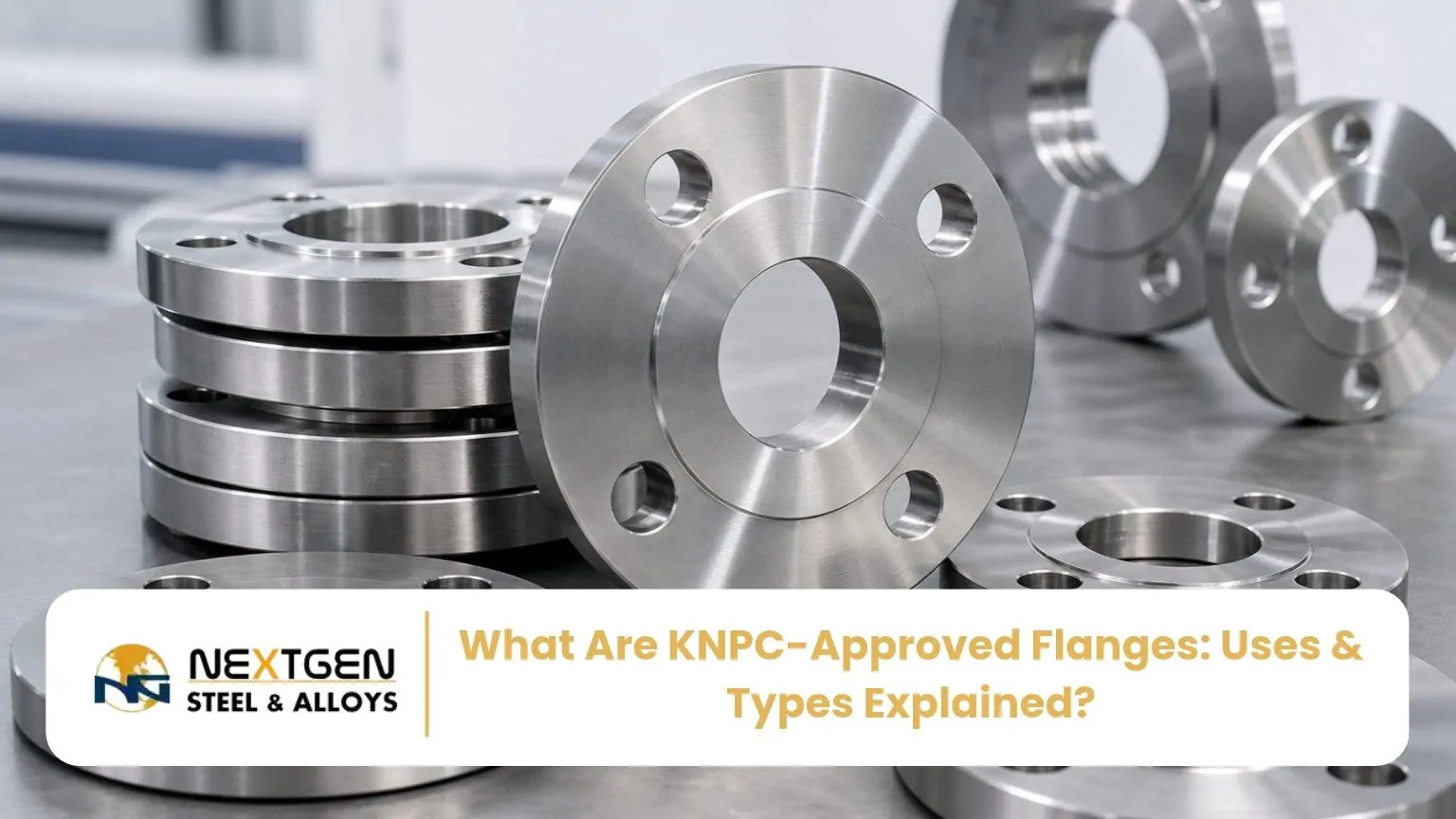
KNPC-approved flanges are flange components that meet the quality, material, dimensional and performance requirements of Kuwait National Petroleum Company projects. Every bolted joint in a refinery or process plant is a potential leak path. Flanges create secure connections between pipes, valves, pumps and vessels. Approval status governs whether a component reaches site at all.
What Are KNPC-Approved Flanges?
KNPC-approved flanges are flanges from manufacturers and material grades accepted onto the approved vendor and material lists for KNPC projects. KNPC-approved flanges are flanges supplied by manufacturers or vendors accepted for KNPC projects and manufactured to the applicable piping, material, and dimensional standards.
That acceptance matters because refinery piping can face pressure, high temperature, corrosive media and cyclic loading. A joint must withstand the combined service conditions. Approved ranges cover KNPC flanges across stainless steel, carbon steel, duplex, nickel alloys and other categories. So the specifier matches metal to service rather than working around a limited stock list.
Why Are KNPC-Approved Flanges Used in Industrial Piping?
KNPC-approved flanges ensure strict compliance, safety, and durability in high-pressure oil and gas piping systems. Here are five practical reasons why.
Reliable Pipe Connections
Bolted flange joints give a demountable connection that holds its seal through service. Even bolt loading across a machined face keeps the gasket compressed, which stops a joint from weeping under vibration.
Pressure and Temperature Handling
Each flange carries a pressure class rated against temperature, from Class 150 through Class 2500. The rating falls as temperature rises, so the class is selected against the hottest operating condition rather than the ambient one.
Corrosion Resistance
Material grade decides corrosion life. Stainless and duplex grades resist chloride attack, nickel alloys handle acid and sour service, and carbon steel covers clean hydrocarbon lines at lower cost.
Material and Dimensional Consistency
Approved supply means verified chemistry, mechanical properties, and dimensions on every item. Consistent face finish and bolt circle let a joint assemble the first time in the field.
Compatibility With Industrial Piping Systems
Dimensions follow ASME B16.5 and B16.47, so flanges mate with pipe, valves, and equipment from other approved suppliers without adaptation.
Types of KNPC-Approved Flanges
Eight types cover nearly every connection a refinery layout needs.
KNPC Approved Weld Neck Flanges
A tapered hub transfers stress gradually from the flange into the pipe wall, which suits high-pressure and high-temperature lines. The butt-welded joint and smooth bore also reduce turbulence and fatigue at the connection.
KNPC Approved Slip-On Flanges
The pipe slides into the bore and two fillet welds secure it. Fabrication is straightforward, and cutting length is less critical. This makes slip-on flanges useful for many lower-pressure services.
KNPC Approved Socket Weld Flanges
The pipe seats in a machined recess and a single external fillet weld holds it. Smaller-diameter lines use them where a strong welded connection is needed without the cost of a weld neck.
KNPC Approved Blind Flanges
A solid disc closes a pipe end, isolates equipment for maintenance and can seal a line during pressure testing.
KNPC Approved Threaded Flanges
Threads engage the pipe directly, so no welding takes place. These serve lines where welding is undesirable, including some low-pressure utility services and areas where hot work is restricted.
KNPC Approved Lap Joint Flanges
The flange rotates freely over a stub end, letting bolt holes align without rotating the pipe. Systems needing frequent dismantling benefit, and the flange itself can be a cheaper grade than the wetted stub.
KNPC Approved RTJ Flanges
A metal ring seats into machined grooves on both faces and deforms under bolt load to form a metal-to-metal seal. RTJ sealing is suited to high-pressure and high-temperature services. The metal ring resists extrusion better than many soft gasket materials.
KNPC Approved Orifice Flanges
Paired flanges carry pressure tappings either side of an orifice plate, allowing flow measurement by differential pressure without breaking into the line.
Where Are KNPC-Approved Flanges Used?
Oil & Gas Pipelines
Transmission and process lines carrying hydrocarbons, often under sour conditions requiring qualified materials.
Chemical Processing
Reactor and transfer piping where the flange material has to match an aggressive process stream.
Power Generation
Steam, feedwater and auxiliary systems operating at sustained temperature and pressure.
Marine Applications
Offshore and shipboard piping exposed to seawater and salt-laden air, where chloride resistance governs grade choice.
Industrial Engineering Systems
General utility, cooling water and compressed air services across plant infrastructure.
How to Select the Right KNPC-Approved Flange?
Start with the flange type, then work through pipe size and pressure class against the design conditions. Fix the operating temperature, because it lowers the allowable pressure for every class. Choose the material grade from the fluid chemistry rather than from cost alone. Confirm the facing type, raised face, flat face or ring joint, since it has to match the mating flange. Settle the connection method, weld or thread. Check gasket compatibility with both the facing and the medium. Apply the governing piping standard, then verify the project-specific approval requirements and the documentation that proves them.
Conclusion
KNPC-approved flanges span eight principal designs and a wide range of material categories, so there is a configuration for almost any piping requirement. Safe, reliable joints depend on matching the flange type, pressure class, material grade, facing, and dimensions to the service conditions. Confirm project approval and certification requirements before shipment.