
What Should You Consider When Selecting Saudi Aramco Approved Flanges?
Saudi Aramco Approved Flanges are chosen as per the project specification released for the specific contract and not as per general ASME or API standards. SAES (Aramco engineering standards) often have requirements beyond the base ASME B16.5 or B16.47 requirements. These can include material traceability, additional testing or specific marking requirements. A flange to ASME B16.5 dimensions is not automatically qualified for Aramco procurement. Approval is granted based on vendor qualification, documented compliance with the applicable SAES document and conformance to the drawings issued for the specific project. Standards are updated and having outdated revisions can result in compliance gaps at inspection. Buyers should always confirm the current specification revision with the project engineering team before ordering.
Key Factors for Flange Selection
Flange Type
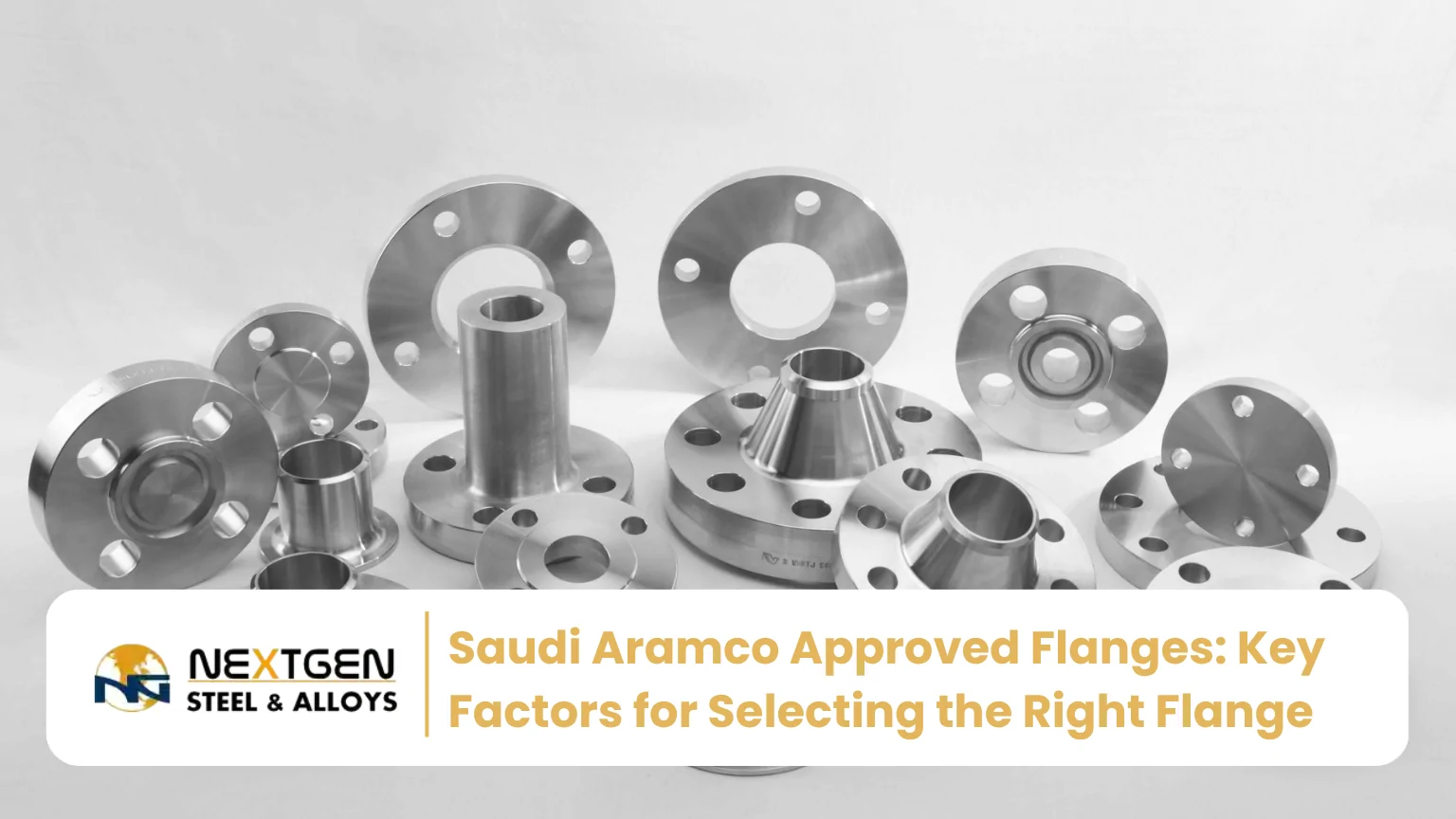
Weld neck, slip-on, blind, socket weld, threaded and lap joint flanges suit different jobs. Pipe schedule, flow direction, access for maintenance and service pressure all decide which one fits.
Pressure Class and Dimensions
NPS/DN size, pressure class and wall thickness need to match the line’s operating pressure and temperature. ASME B16.5 and ASME B16.47 cover dimensional tolerances, the latter for larger diameters.
Material Selection
The flange material has to suit the pipe grade, the fluid and the temperature range it will see. Stainless steel, carbon steel and nickel alloy each behave differently under corrosion and heat.
Facing and Gasket Compatibility
Facing type, raised face, flat face or ring type joint, has to match the mating flange. Gasket material follows on from that, along with what the service actually demands chemically and thermally.
Standards and Project Requirements
Choosing Saudi Aramco Approved Flanges isn’t just a matter of meeting ASME or API on paper. It means following the exact specification issued for that particular contract. Aramco engineering standards (SAES) usually go further than baseline ASME B16.5 or B16.47, adding requirements around traceability, testing or marking. A flange made to ASME B16.5 dimensions doesn’t automatically count as Aramco approved. That depends on vendor qualification, documented compliance with the relevant SAES clause, and following the drawings issued for the job. Specifications get revised, so it’s worth checking the current version with the project team before ordering rather than assuming last year’s copy still applies.
Documentation to Verify Before Procurement
Every flange going to an Aramco project needs paperwork behind it. Material test certificates confirm the chemical composition and mechanical properties match the grade ordered. Dimensional inspection reports check outer diameter, bolt circle, bore and thickness against ASME B16.5 or B16.47 tables. Pressure class markings, heat numbers for traceability and third-party inspection reports usually round out what’s asked for. Some projects also want documentation tied specifically to the SAES clause invoked, separate from the standard mill certificate. Miss any of this at the ordering stage and it tends to surface later, either as a rejected shipment or a delay at site inspection.
How to Select the Right Flange
- Confirm pipe size and schedule first.
- Work out the operating pressure and temperature.
- Pick the flange type based on layout and maintenance needs.
- Confirm the pressure class against ASME B16.5 or B16.47.
- Select a material grade that suits the pipe and fluid.
- Check facing and gasket compatibility with the mating flange.
- Verify the ASME/API standards and project specifications that apply.
- Confirm what inspection and documentation are needed before dispatch.
Nextgen Steel and Alloys manufacture flanges in stainless steel, carbon steel, alloy steel and nickel alloy for use in petrochemical, offshore and gas processing. Third party inspection reports are available. Get in touch to confirm material grade and pressure class before your next order.