
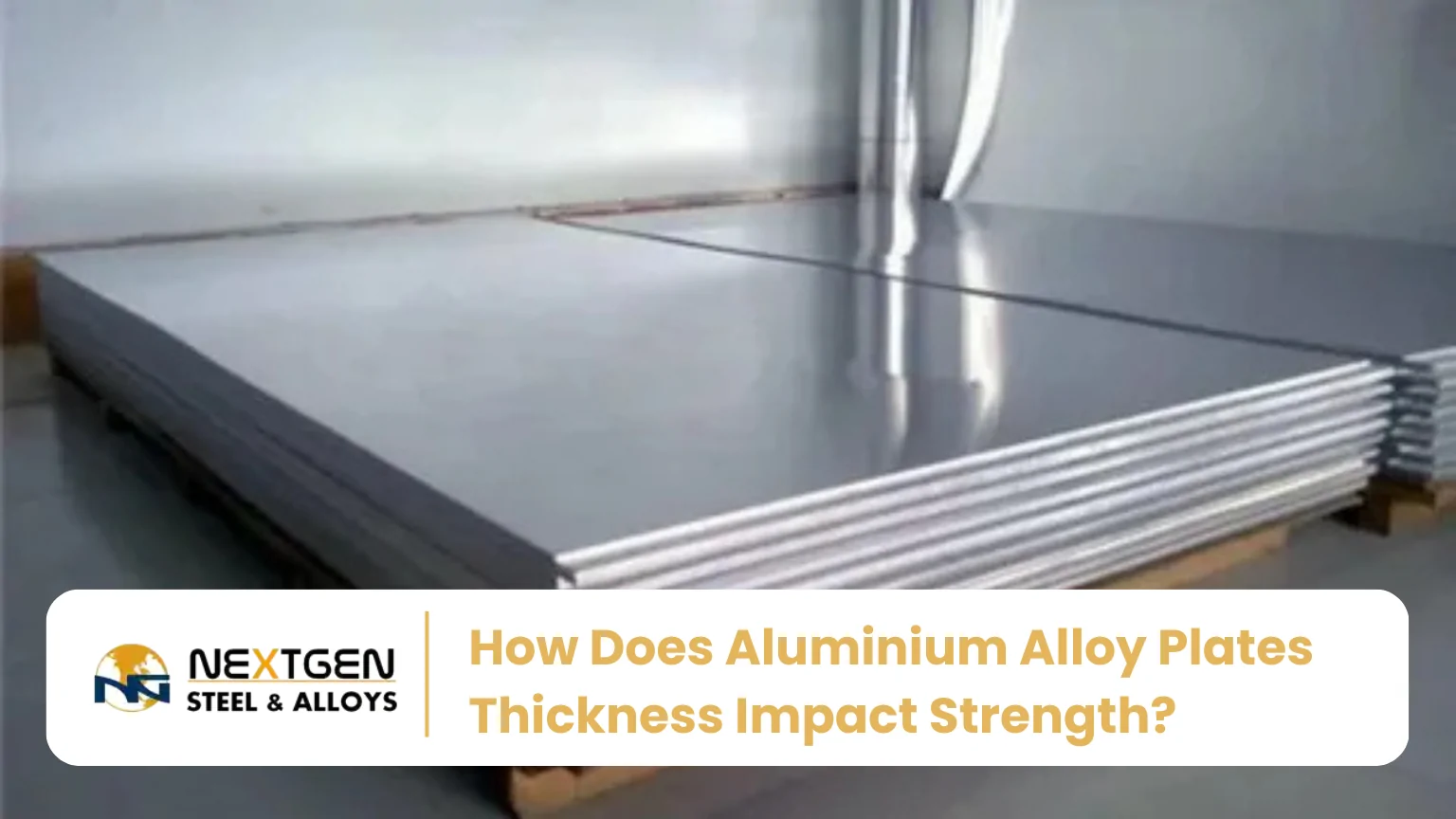
Aluminium alloy plates carry structural loads in aerospace frames, industrial platforms, and machinery bases across dozens of industries. Engineers choose it for one reason: it delivers strength without adding dead weight. Yet a single variable determines whether a project holds up or fails within months: plate thickness. Specify a plate too thin, and it buckles under repeated load. Go too thick, and the structure carries excess weight and cost for no functional gain. This blog explains how thickness controls load capacity, rigidity, and service life, and how that decision interacts with alloy grade selection.
Why Plate Thickness Matters in Structural Applications
A 6 mm aluminium plate flexes under a load that a 20mm plate absorbs without visible strain. Thickness controls how much stress a plate resists before deformation sets in. Thicker sections spread load more evenly across joints and welds. This reduces stress concentration at connection points, directly extending safety margins and service life. Four variables typically drive the thickness decision: load type, environmental exposure, alloy grade, and fabrication method. Skip any one of these, and even a premium alloy grade won’t offset a structural weak point.
How Aluminium Alloy Plate Thickness Affects Structural Performance
Load-Bearing Capacity
More material cross-section means more resistance to deformation. A 25mm plate holds substantially higher compressive and tensile force than a 10mm plate of the same alloy. Crane structures, load-bearing platforms, and industrial supports depend on this margin, since failure at these points shuts down entire operations. Structural stability rises with thickness, provided the alloy grade matches the stress profile the application demands.
Selecting the Right Alloy Grade Along with Thickness
Thickness alone never guarantees performance. Aluminium Alloys 2014 suits high-strength aerospace components that need to hold tight tolerances under repeated stress. Aluminium Alloys 2017 fits general engineering parts where moderate strength and easy machinability matter more. For fasteners and precision fittings requiring a clean surface finish, aluminium alloys 2011 plate remains the standard choice. Matching grade to thickness keeps both mechanical strength and dimensional accuracy on target.
Resistance to Bending and Deflection
Rigidity climbs as thickness increases. Thin plates bend under moderate pressure. That shift in shape throws off alignment across assembled structures within weeks of operation. Thicker sections hold their form under sustained load or vibration, protecting the tight tolerances that precision equipment depends on.
Weight and Structural Efficiency
Extra thickness adds strength, but it adds mass too. Thinner sections cut weight and material cost, though only where load demands stay low. The real task is finding the balance point, enough thickness to meet the load spec without carrying material that serves no purpose. Aerospace and automotive teams treat this trade-off as a core design constraint, since every extra kilogram cuts into fuel efficiency and payload.
Impact and Fatigue Resistance
Thin plates develop microscopic cracks faster under repeated loading cycles. Left unchecked, these cracks propagate into full failure. Thicker sections absorb the same cyclical stress with less cumulative damage, stretching component life in vibrating machinery frames and load-cycling structures. Fatigue resistance becomes non-negotiable in transport and industrial equipment running under constant mechanical stress.
Fabrication and Machining Considerations
Cutting speed, tool wear, and weld strategy all shift with plate thickness. Thin plates cut fast. Thick plates need adjusted feed rates, additional weld passes, and stronger fixturing to hold position during processing. Matching equipment capability to the plate spec keeps production on schedule; a mismatch here slows output and drives up scrap rates.
Corrosion Resistance and Service Life
The extra thickness gives corrosion a longer path to travel before it gets to load-bearing material. In marine or outdoor environments, this margin can add years to usable service life. Plates that are exposed to moisture, salt spray, or chemical contact require a thickness allowance built in for gradual material loss that lowers the frequency of maintenance and replacement cost over the life of the structure.
Factors to Consider When Choosing Aluminium Plate Thickness
Six factors shape this decision in practice: application requirements, expected load conditions, structural design constraints, fabrication method, weight limitations, and environmental exposure. A marine platform needs a different thickness allowance than an indoor machine frame carrying a comparable load. Reviewing these six factors together, rather than picking thickness first and adjusting design around it, prevents expensive redesigns once fabrication is underway.
Mistakes to Avoid When Selecting Plate Thickness
Cost-driven thickness selection reverses the moment the structure meets real-world load and fails early. Guesswork on load requirements produces one of two outcomes: an overbuilt, overpriced component, or an underbuilt one that’s unsafe. Fabrication limitations get overlooked too often, only surfacing when cutting or welding reveals that the plate doesn’t suit the equipment on hand. Wrong alloy grade paired with the chosen thickness undercuts mechanical performance regardless of dimension. And skipping future operating conditions- higher loads, harsher environments, tighter cycles, shortens a structure’s working life well before its intended end.
Conclusion
Plate thickness drives nearly every performance outcome for an Aluminium Alloys Plate: load capacity, rigidity, fatigue resistance, and corrosion protection all trace back to this one specification. The right combination of Aluminium Plate thickness and alloy grade guarantees reliable structural performance, improved durability and long-term efficiency across a wide range of industrial applications. Make the correct design decision the first time, avoid expensive rework and stay on schedule.
Contact Nextgen Steel & Alloys to specify the right plate thickness and alloy grade for your next structural project.