
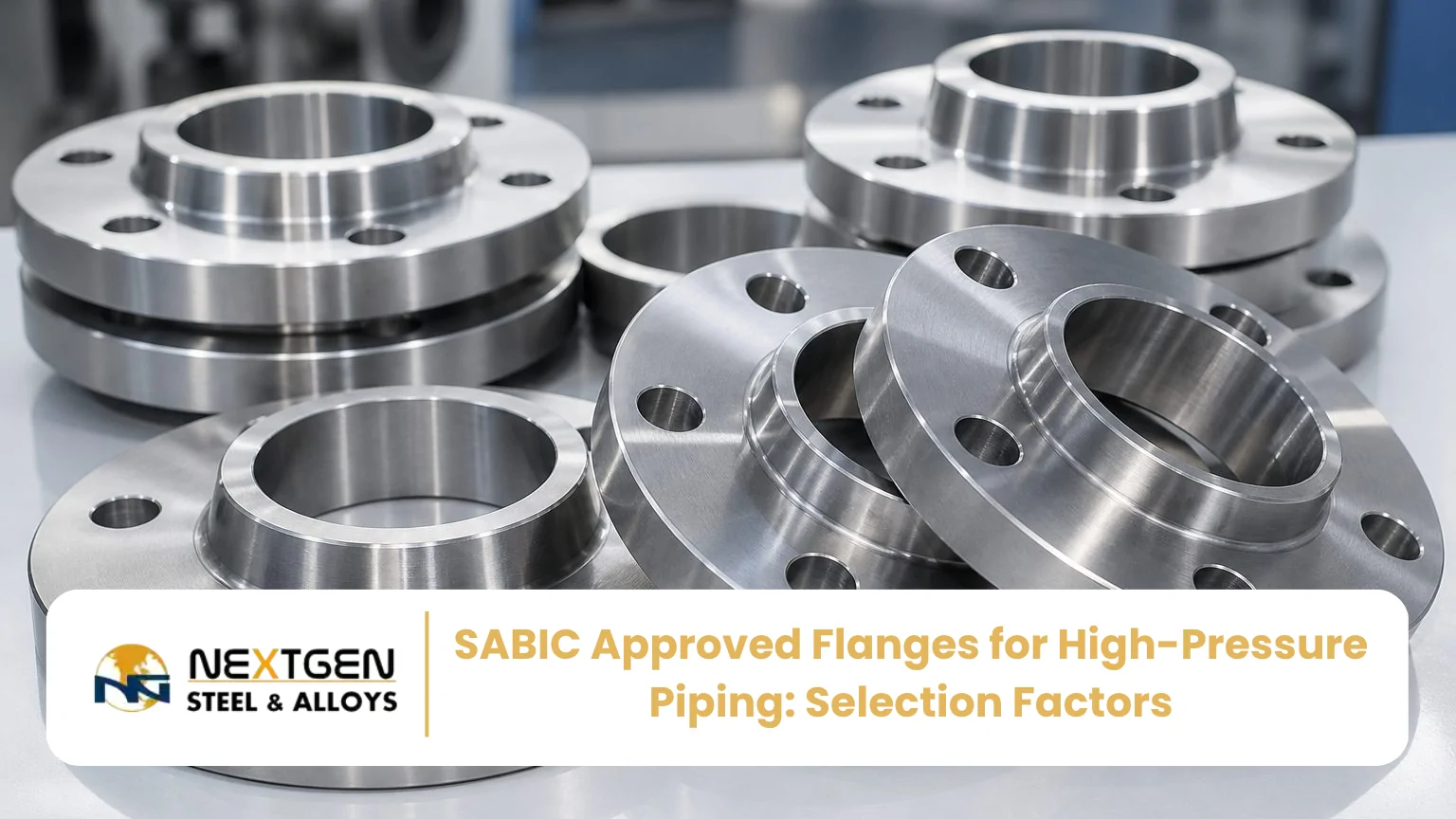
Flanges are placed at every joint, valve connection and equipment nozzle in a high-pressure piping system. Getting the selection wrong at any one of these points can affect the whole line. SABIC Approved Flanges need to meet several factors together, not one at a time: pressure class, flange type, material, dimensions, facing, and whatever the specific project asks for. A flange can be the right pressure class and still be the wrong choice if the material doesn’t suit the service. This is why engineers sourcing SABIC Approved Flanges for petrochemical and process piping work through these points as a connected set rather than a simple tick list.
What to Consider When Selecting SABIC Approved Flanges
The selection process starts with the piping system. Design pressure and temperature decide the pressure class first. Pipe size and schedule then narrow down the dimensions. The process medium and the surrounding conditions decide which material will actually hold up over time without corroding or degrading. Flange type comes next, based on how the joint gets assembled and maintained. Facing and gasket choice come last, since these depend on decisions already made earlier. Miss a step in this order and you often end up with a flange that ticks one box but fails another somewhere down the line. Project documentation, including approved vendor lists and material test requirements from SABIC Approved Flanges, confirms the flange actually fits that particular job.
Key Factors for Selecting Flanges
Pressure Class and Operating Conditions
Flange pressure class has to match the piping system’s design pressure and temperature. Ratings drop as temperature goes up, so don’t assume a higher class automatically covers a lower-temperature situation without checking the tables first.
Flange Type and Configuration
Weld neck, slip-on, blind, socket weld, threaded, and RTJ flanges each work differently. Which one to use depends on the pipe schedule, whether the joint needs to come apart later, and the service conditions involved.
Material Compatibility
The flange material needs to match the connected pipe grade and hold up against the process medium at the required temperature and pressure. Get this wrong and you’re looking at galvanic corrosion or a joint that fails early.
Dimensions and Pipe Compatibility
NPS/DN, pipe schedule and bore size all decide the flange dimensions and bolt circle. Mating flanges need to line up exactly, since even a small mismatch on dimensions means the seal won’t hold properly.
Facing and Gasket Selection
Flange facing, whether raised face, flat face or ring type joint, has to match the mating flange. The gasket material then depends on the pressure, temperature and what’s actually flowing through the line.
Standards and Project Requirements
Meeting ASME B16.5 or API 605 doesn’t automatically mean a flange is SABIC-approved. SABIC projects add their own specifications, approved manufacturer lists and inspection requirements on top of the international standards. A flange can be fully ASME compliant and still not clear a particular SABIC project if the paperwork isn’t there or the vendor hasn’t gone through approval. Anyone sourcing SABIC flange specifications needs to check both the base standard and whatever project addendum applies before the order goes out. This comes up most on multi-vendor projects, where suppliers can read the same standard differently unless the project’s own clarifications are attached.
Documentation to Verify Before Procurement
Every flange going to a SABIC project needs paperwork behind it before it leaves the supplier. Check the material grade against the piping specification. Check the pressure class stamped on the flange matches what was ordered. Confirm the standard, whether it’s ASME, API or something SABIC-specific, and check the dimensions against the isometrics. A proper Material Test Certificate should trace the heat number back to the mill, and traceability records need to follow the flange right through from raw material to finished part. Inspection and testing requirements, hydrotesting or NDT reports where they apply, should come with the shipment. Project-specific approval documentation, vendor qualification records and so on, ties all of this together for whoever’s inspecting the incoming material on the SABIC side.
SABIC Flange Selection Checklist
- Confirm design pressure and temperature for the piping system.
- Confirm pipe size and schedule against the isometric drawings.
- Select the flange type suited to the joint configuration.
- Verify the pressure class against ASME or API rating tables.
- Confirm material compatibility with the connected pipe and process medium.
- Check facing and gasket requirements against the mating flange.
- Verify applicable standards and any SABIC-specific project specifications.
- Review certification and inspection documents before dispatch.
Skip this sequence and you’re more likely to see rejections at incoming inspection, which just delays the project. Nextgen Steel and Alloys supplies flanges manufactured to ASME and API standards with full material traceability for flanges for SABIC projects, along with the documentation needed on the SABIC side. Get in touch with our team to confirm material grade and pressure class for your specific requirement.