
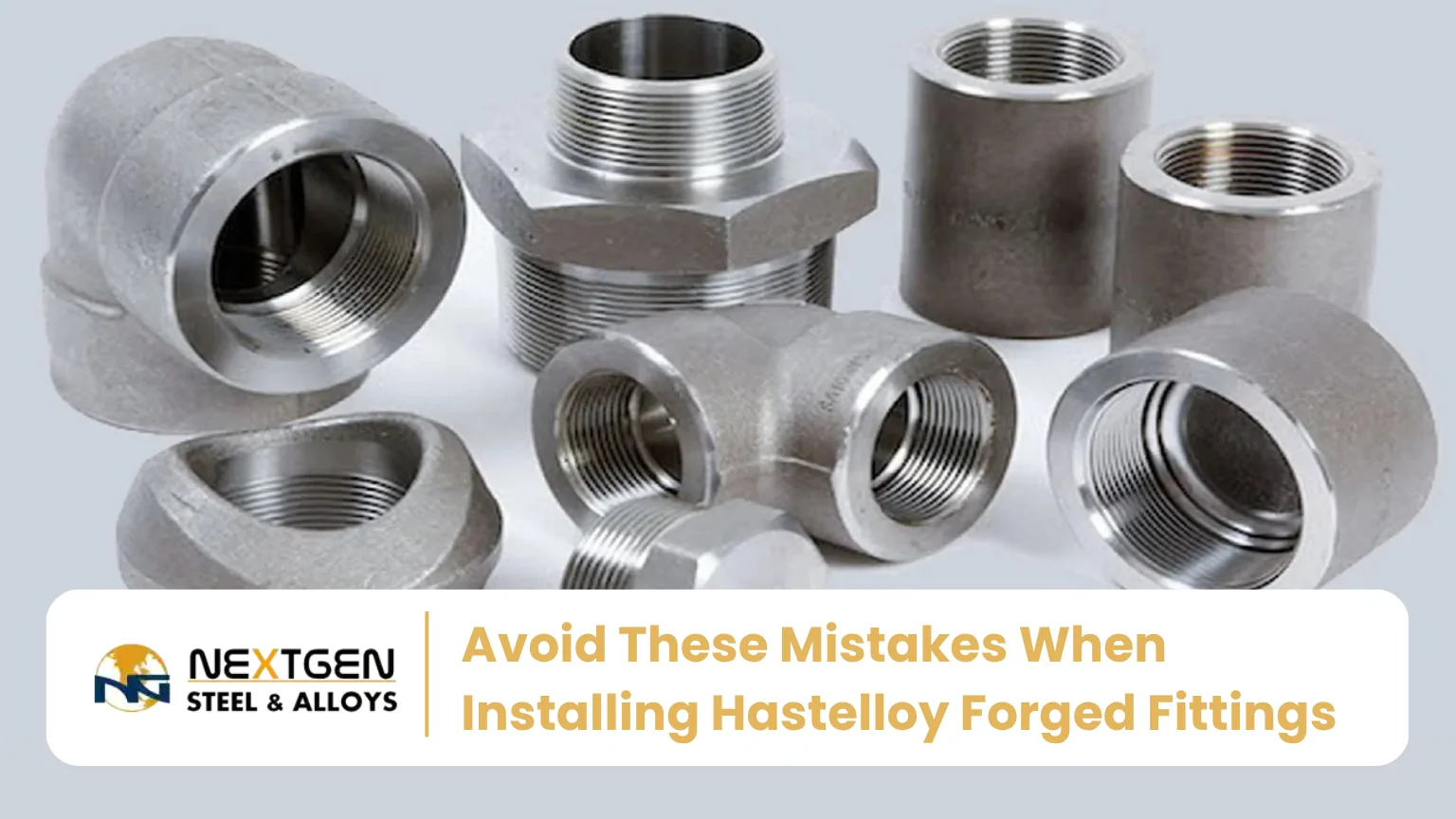
Hastelloy Forged Fittings are used in some tough process environments, chemical reactors, and sour gas lines. Picking the right grade decides whether a fitting lasts 20 years or fails in a few months. A poorly cleaned surface, choosing the wrong torque any of these can turn a good corrosion-resistant fitting into a leak point. Below are the mistakes we see most often with Hastelloy Fittings.
Why Proper Installation of Hastelloy Forged Fittings Matters
A joint that leaks defeats the purpose of specifying a nickel alloy in the first place. These fittings resist acids, chlorides, and temperatures above 400°C, but none of that matters if the connection isn’t right. Poor installation creates stress points, and corrosion tends to start right there, often at the weld or the seal face. That means more maintenance, more downtime, more cost. Sticking to the manufacturer’s torque values, cleaning steps, and welding parameters protects what you’ve already paid for in the alloy itself.
Common Mistakes to Avoid When Installing Hastelloy Forged Fittings
Improper Surface Cleaning Before Installation
Oil, dirt, or oxide scale left on a sealing surface leaves tiny gaps. No amount of torque fixes that later. Clean the mating surfaces properly with a solvent suited to nickel alloys before you assemble anything. Even small contamination can turn into a leak path within a few weeks of startup. Use lint-free wipes, skip the chlorinated cleaners since they react with the alloy. A clean joint just seats better and seals first time.
Over-Tightening or Under-Tightening Connections
Torque for Hastelloy C276 Forged Fittings isn’t the same as for carbon steel, the yield strength and thread friction are different. You can under-tighten and you get gaps that leak once pressure starts cycling. You can over-tighten and gall the threads or deform the seal face. Check the manufacturer’s torque chart for the fitting size and pressure class, and use a calibrated wrench. Correct torque, applied once, outlasts repeated field adjustments.
Ignoring Material Compatibility
Fitting a Hastelloy component to an incompatible pipe or flange sets up galvanic corrosion at the joint. This happens even when both parts can handle the process fluid on their own. Match alloy grades using the compatibility chart, not by how similar the metals look. In a wet or conductive environment, dissimilar metals can start pitting at the interface within months. Checking compatibility first saves the whole line and the fitting.
Using Incorrect Welding Procedures
Hastelloy needs specific filler metals, usually matching or slightly overalloyed, and low heat input so you avoid carbide precipitation at the weld zone. A qualified welding procedure specification, backed by welders certified for nickel alloys, prevents cracking and loss of corrosion resistance. Using a carbon steel procedure or the wrong filler can lead to brittle zones that fail under thermal cycling. Every weld here should follow ASME Section IX.
Selecting the Wrong Forged Fitting
Elbows, tees, couplings, unions they all do different jobs in a piping layout. If you swap one for another because you’re in a hurry, you end up with unplanned flow restrictions or stress concentrations. Confirm schedule, end connection, and pressure rating before ordering anything. For reducing acid environments, Hastelloy C22 forged fittings often do better than C276, particularly where oxidizing chlorides are present. Get the fitting type right from the start, it avoids expensive rework later.
Skipping Inspection and Pressure Testing
A quick visual after installation catches misalignment, weld defects, and damaged threads before the system goes live. Hydrostatic or pneumatic testing, done to the applicable code, confirms the joint holds at 1.5 times design pressure without leaking. Skipping this to save a couple of hours can risk a failure once the line is under full load. Document the test results before handing the system over.
Best Practices for Installing Hastelloy Forged Fittings
Start with the manufacturer’s documentation rather than assuming carbon steel practices apply here. Use tools rated for the fitting size and torque range. Keep the work area free of grinding dust or stray metal particles; they can embed in the alloy surface. Check alignment before you tighten or weld anything; a forced misaligned joint often cracks months down the line. Finish with a full inspection and pressure test, and record results against the fitting’s heat number.
Summary
Most Hastelloy Forged Fittings failures trace back to installation, not material defects: poor cleaning, incorrect torque, mismatched materials, faulty welds, wrong fitting selection, or skipped testing. Each of these mistakes is preventable with the right procedure and a bit of attention at the assembly stage. Get installation right, and Hastelloy Fittings deliver decades of corrosion resistance and dependable service in the toughest process conditions. For fittings manufactured to exact specification and backed by proper documentation, contact Nextgen Steel & Alloys for your next project requirement.