
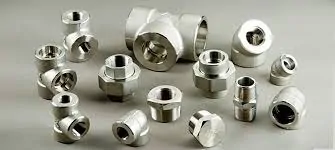
In complex piping systems, strong joints are essential. Forged fittings connect the pipes and help keep the system leak-free and stable, even under pressure. For high-temperature conditions, SS 310 forged fittings are an excellent choice. They offer a unique blend of heat resistance and chemical stability. While standard stainless steel grades might fail when temperatures climb, Grade 310 maintains its structural form. Industries rely on these fittings to handle extreme thermal cycling and corrosive fluids. To get the best results, sourcing from a reliable supplier like Nextgen Steel & Alloys ensures your project meets the highest quality standards.
What Are SS 310 Forged Fittings?
Forged fittings are pipe parts made by using high pressure and heat. The metal is shaped while solid, which makes its internal structure stronger. Stainless Steel 310 is a type of steel with high chromium and nickel. This mix helps it resist rusting in continuous service at temperatures up to 1150°C.
Unlike cast fittings, which are made by pouring melted metal into a mould, forged fittings are much stronger. Forging removes internal gaps and weak spots in the metal. Because of this, SS 310 forged fittings are a top choice for high-pressure systems where safety is critical. They offer high strength, excellent heat resistance, and better durability than common grades like 304 or 316.
Key Features of SS 310 Forged Fittings
These fittings have several metallurgical traits that make them stand out in industrial settings.
- High-temperature resistance: They can operate in extreme heat environments without losing their mechanical shape.
- Resistance to scaling: The high chromium content prevents thick oxide layers from forming on the surface.
- Excellent weldability: Grade 310 is easy to weld with normal workshop methods.
- Long service life: These fittings need very little maintenance, even in tough chemical conditions.
- High mechanical strength: Forging makes them strong enough to handle high internal pressure.
Types of SS 310 Forged Fittings
There are several designs of fittings used to redirect, branch, or seal a piping network.
-
Socket Weld Fittings
Socket weld fittings feature a recessed area where the pipe is inserted before welding. This design creates a smooth internal passage and improves flow performance. These fittings are typically used in high-pressure systems where the connection has to be strong and permanent. Typical examples are 90° elbows, tees, and couplings.
-
Threaded Forged Fittings
Threaded fittings connect pipes without welding. This makes installation quicker and safer in places where sparks are risky. They give a tight, leak-proof seal and are often used in low-pressure or temporary piping systems.
-
SS 310 Forged Elbows
Elbows are used to change the direction of the fluid flow within the system. You can find them in various angles, such as 45°, 90°, and 180°. Grade 310 elbows are essential in furnace ducting where hot gases must turn corners.
-
SS 310 Forged Tees
Tees are shaped like the letter “T” and let one pipe split into two. You can use equal tees for the same pipe size or unequal tees when the pipes have different diameters.
-
SS 310 Forged Couplings
Couplings help connect two lengths of pipe together or extend an existing line. A full coupling links two pipes together, whereas a half coupling is typically welded to a larger pipe to form a branch connection.
-
SS 310 Forged Unions
Unions are similar to couplings but allow for easy dismantling of the pipework. They are used in systems that need frequent cleaning or part replacements.
-
SS 310 Forged Caps & Plugs
Caps and plugs close the end of a pipe. They keep contaminants out of the system and securely block the flow of materials.
Standard Sizes and Dimensions of SS 310 Forged Fittings
These components are manufactured to strict global standards to ensure they fit perfectly with existing pipes.
| Feature | Details |
| Size Range | 1/8” to 4” NB (Nominal Bore) |
| Pressure Ratings | Class 2000, 3000, 6000, 9000 |
| Material Standard | ASTM A182 / ASME SA182 |
| Dimension Standard | ASME B16.11, MSS SP-79, SP-83, SP-95 |
| Thread Types | NPT, BSPP, BSPT |
Nextgen Steel & Alloys offers customization for these fittings to meet specific project needs or non-standard dimensions.
Chemical Composition and Mechanical Properties
The performance of SS 310 is a direct result of its elemental composition.
Chemical Composition
Grade 310 contains roughly 25% chromium and 20% nickel. Chromium provides the primary resistance to oxidation. Nickel adds toughness and helps the metal stay stable at high temperatures. Carbon is kept at a controlled level to balance strength and weldability.
Mechanical Properties
These fittings have a minimum tensile strength of 515 MPa and a yield strength of 205 MPa. They offer an elongation of about 40%. This means the metal is strong but can also withstand some deformation without cracking.
Advantages of Using SS 310 Forged Fittings
Choosing the right material saves time and money over the life of a project.
- Ideal for heat: These fittings stay stable in furnaces and kilns where other metals melt or warp.
- Corrosion resistance: They resist green rot and other forms of chemical attack.
- Reliability: They offer consistent performance in the most extreme industrial conditions.
- Cost-effective: While the initial cost is higher, their long life reduces the need for frequent replacements.
- Easy maintenance: The smooth forged finish makes them easy to clean and inspect.
Industrial Applications of SS 310 Forged Fittings
Various sectors use these fittings to keep their operations running safely.
-
Oil & Gas Industry
These fittings are used in refineries and offshore rigs. They handle the high pressures and temperatures found in crude oil processing.
-
Petrochemical Industry
Chemical plants use SS 310 to move corrosive acids and gases. The grade prevents the pipes from thinning due to chemical erosion.
-
Power Generation Plants
In power plants, these fittings are found in boilers and heat exchangers. They withstand the constant thermal stress of steam production.
-
Chemical Processing Industry
Facilities that transport high-temperature fluids rely on these connectors. They ensure that toxic or hot chemicals do not leak into the environment.
-
Marine Industry
The high alloy content helps resist saltwater corrosion. They are used in ship engine cooling systems and desalination plants.
-
Aerospace & Furnace Applications
SS 310 is a staple in furnace parts, kiln liners, and aerospace heat shields. It is one of the few materials that can handle direct flame contact for long periods.
Quality Standards and Testing
Quality assurance is mandatory for forged fittings. Every piece must undergo rigorous testing to ensure it won’t fail under pressure. Standard tests include hydrostatic testing, where the fitting is filled with liquid to check for leaks. Non-destructive testing (NDT), like ultrasonic or magnetic particle inspection, looks for internal flaws. Positive Material Identification (PMI) confirms that the alloy contains the correct amount of Nickel and Chromium.
Why Choose Nextgen Steel & Alloys for SS 310 Forged Fittings
Nextgen Steel & Alloys is a trusted name in the manufacturing and supply of high-grade fittings. We offer a massive range of sizes and pressure classes to suit any industrial need. Our production facility follows strict quality control steps to ensure every fitting is perfect. We provide competitive pricing and ensure your order arrives on time. With our global distribution network, we can support projects anywhere in the world. Our team also provides expert support to help you choose the right specifications for your system.
Conclusion
Nextgen Steel & Alloys provides the durable SS 310 forged fittings you need for high-stakes environments. These components are essential for systems dealing with extreme heat and corrosive elements. We have explored the different types, like elbows and tees, along with their vital mechanical properties. Because they are forged, they offer a level of safety and strength that cast parts simply cannot match. Whether you are in the oil industry or running a power plant, these fittings ensure your piping stays secure for years.
Contact Nextgen Steel & Alloys today to get a quote on premium SS 310 forged fittings for your next project.